

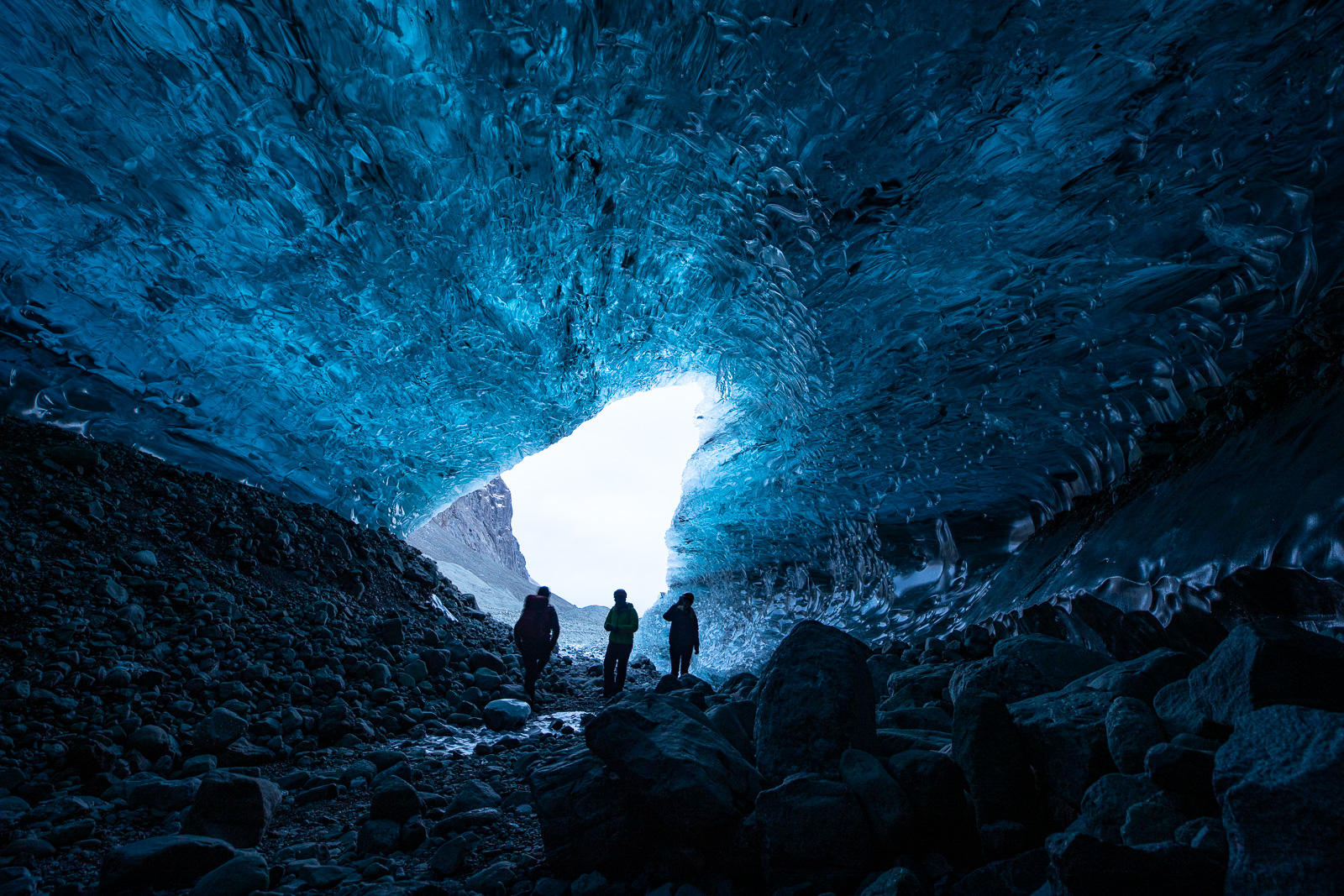
Limits will be imposed on ice cave tours in Vatnajökull National Park this winter. Fewer companies received contracts for these tours than had applied, and the Nature Conservation Agency of Iceland may restrict visitor numbers if overcrowding occurs in the caves, RÚV reports.
The ice cave season begins in October. Last year, around 200,000 people took part in glacier hikes or ice cave tours in the park.
The park tightened the rules following a fatal accident at Breiðamerkurjökull more than a year ago. The ice cave season is now strictly defined, with caves closed from May through September. Companies assess risks in the caves daily and share information among themselves. As the park operates under the Nature Conservation Agency, consultations concluded that the agency must have the authority to limit visitor numbers to ensure safety.
Updated agreements, and less tour operators
According to Sigurjón Andrésson, Chairman of the Board of Vatnajökull National Park, four of the companies that applied for a permit to take people on ice cave tours did not receive one. “So currently, 30 companies have contracts with the park to lead glacier hikes and ice cave tours. There were 34 companies that applied, and 30 contracts were available. These companies must meet various requirements regarding safety and visitor experience. We are taking these matters very seriously,” says Sigurjón.
Under the agreements, each guide is allowed to lead only 8-16 guests, depending on the nature of the tour. The Nature Conservation Agency has the authority to step in and limit the total number of visitors if necessary to reduce queues and overcrowding. “Managing the load, setting limits, or controlling departures with visitors on and around the glacier — all of this is done to ensure safety and to protect this valuable experience,” says Sigurjón.
Ice cave tours in Vatnajökull National Park alone generate significant revenue — four to five billion ISK per year. The current contracts are for two years, with the aim of moving to five-year agreements to increase predictability.
Visitor management in the ice caves could become a model for other areas, and careful work is required in allocating contracts for this limited resource. “It must be ensured that this does not become something that can be bought and sold. At the same time, we need to think long-term so that there is room for renewal and innovation in these contracts,” says Sigurjón.


