Sprouting again
Since the early 2000s, Ólöf Arnalds has been a fixture in the Icelandic music scene. Earning her stripes as a touring member of indietronica band múm from 2003-2008, Ólöf eventually went solo in 2007. On December 5, Ólöf is set to release her first album in more than a decade, Spíra.
After releasing her debut album Við og við, Ólöf Arnalds ventured into greater and more complex arrangements on Innundir Skinni and Sudden Elevation, turning her attention to English lyrics while amassing a big following during her frequent tours abroad.
She was in full stride, performing sold-out shows worldwide alongside acts like Sigur Rós, Blonde Redhead and Grinderman. Then, Ólöf focused inwards, swapping out the chaos of concert tours for the consistency of a regular paycheck as her responsibilities at home grew.
“I found myself forced to do this,” Ólöf starts, sitting in the kitchenette of Mengi — the experimental music hub on Óðinsgata — explaining how the decision to make Spíra came about. “I changed my lifestyle, taking a break from touring, and I started to work on other things. I’m always writing in my head, so I couldn’t really control that the album came to be.”
“I’m celebrating rediscovering my creative force.”
Heading into the studio, Ólöf found herself tracing the exact same steps which led to her debut, using the same recording techniques, simultaneously singing and playing in Studio Sundlaugin’s control room.
As Spíra mirrors Við og við, Ólöf describes her latest album as a, “homecoming. It’s more natural. Like I’m returning to what I find easy to do and do well.”
The hidden entourage
Based on Ólöf’s traditional singer-songwriter style, Spíra’s tracklist is aided by Ólöf’s longtime collaborators Davíð Þór and Skúli Sverrisson — her husband. Despite their presence on the album, Spíra sounds remarkably lonesome, as the backing arrangements sneak in and out of focus, blending seamlessly with the main body.
Praising her colleagues, Ólöf notes that despite being recorded during different sessions, the final outcome sounds like a coherent whole. “I think it doesn’t sound that we’re doing anything else than performing together in the moment. I’m happy that it’s live and all done with whole takes — ways in which I like to work,” she says.
“I’ve always been impressed with getting a whole recording in one take and not messing with fixing tiny vocal parts,” she shares about her recording process. “It’s tempting and I’d like to — no take is perfect. It’s not a principle of mine [to embrace organic techniques], but I like identifying the body of the recording.”

Much like Ólöf’s previous material, Spíra’s subject matter is close to her heart. “It’s funny when you start talking about an album retrospectively, it’s difficult to define it,” Ólöf continues. “It’s emotionally loaded. I’m writing poetry about intimacy and my closest people. I’m celebrating rediscovering my creative force.”
“There’s one track that happens in the dead of winter,” Ólöf starts, referring to “Úfinn sjór”. “Maybe not the dead of winter, but the point in time where it starts to get dark again. It’s a relief for me. I find summer to be daunting,” she confesses. “I function well in the dark. I end up feeling the brightness blues in summer,” she adds with a smile.
Synesthetic songwriting
A strong component of Spíra’s allure is the vivid imagery projected. Through the combination of Ólöf’s tender guitar plucking, impeccably executed falsettos and lyricism, Spíra produces an almost synesthesia-like emotion, being able to mentally envision images to music and words. It’s a trait possessed by Ólöf, who describes seeing her lyrics and music cinematically.
“I find summer to be daunting.”
Similarly to Við og Við, Spíra sees Ólöf return to singing exclusively in Icelandic. Her native language allows her to experience the effects of her synesthesia more distinctly. “Singing in Icelandic removes all filters. It’s clearer to me. To an extent [it’s more difficult] — it can be harder to deal with the closeness that follows. But I’ve never thought that to be a negative.”
“I started writing in English because I was playing so much [abroad]. There was a moment where I started feeling strange that people never understood what I sang about. So I did it to communicate on stage, in a way,” Ólöf explains.
“I feel more like myself when I sing in Icelandic. On the last two records I went all over the place experimenting. Now, I’m stripping it down and finding the core of how I write and make music,” she says.
Raised in large parts by her book publisher grandparents, Ólöf grew up with an innately particular view of the Icelandic language. “I learnt this type of golden-age Icelandic almost,” she remarks.
“I care deeply about the Icelandic language, without denying the transformations it’s undergoing,” Ólöf continues, emphasising the literary quality of Spíra’s lyrics. “It’s natural for it to change, but I feel like I’m starting to miss it because the changes don’t exclusively include slang and new words, but syntax and structure.”
The new world
With a whole decade between releases, Ólöf has needed to come to terms with the changing structures of the music business, such as familiarising herself with the social media hegemony.
“I’m such a dinosaur,” Ólöf laughs, poking fun at herself. “I first started touring with múm when we sold CDs, which is incredibly remarkable today,” she reminisces.
“Let’s say I’m facing a steep learning curve. I am on that Gen X-Millennial brim, leaning more Gen X because I didn’t grow up with a lot of technology. So I’m not what you’d call ‘digitally native’,” she points out.
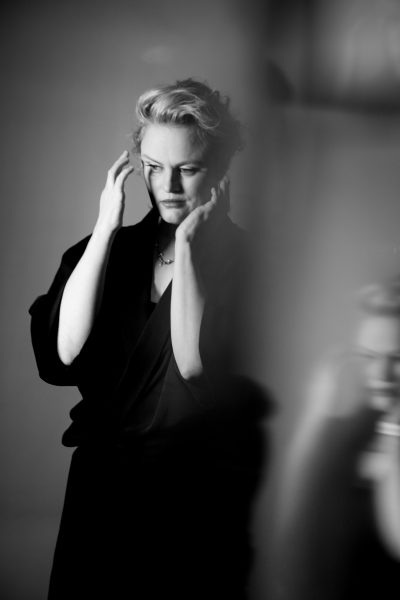
“I’m in a rigorous program trying to accomplish everything I need to do,” Ólöf says, referring to her multiple hats as an independent artist, such as needing to manage her social media and PR on her own.
“[The social media stuff] is something I completely trashed when I was at my peak in touring. I could have been more active there, but I saw it as something alien to me — to be in this relentless self-promotion. Something inside me just didn’t make it,” she says.
“But my feelings towards it have changed. I find it easier and I think it boils down to whether you can stop being ashamed of doing it,” she continues with a big laugh.
In juxtaposition with her previous lifestyle, Ólöf does intend to tour Spíra, having started work on another album. “I’ve sat on this album for some time. During the meantime, I wrote new songs. I just want to make another one,” she concludes.
Spíra is out via Bella Union on December 5 on vinyl and digital formats. Follow Ólöf and her journey towards social media mastery on Instagram and Facebook as @olofarnalds.