Gaddavír is a pillar in the punk community
“Are you a weeb?” asks Gaddavír frontman Kristján Alexander Reiner Friðriksson as I meet up with the longstanding hardcore punk band. He’s showing me new band merchandise, rows of red t-shirts stacked in a big box. The merch design is influenced by anime, but my illiteracy of Japanese animations shoots his reference down. Still, in my ignorance, they look cool as hell.
It’s been eight years since hardcore punk group Gaddavír debuted at Músíktilraunir. Based in Akranes the punk troupe has since made a name for themselves as masters of their craft.
Now, the quintet prepares for the big time, playing Europe’s largest heavy metal festival Wacken Open Air, happening in Germany from July 30 to August 2.
Understandably anticipant, singer Kristján is at a loss for words. “It’s awesome but simultaneously weird and funny,” he admits. “Not funny in the sense that we’re downplaying Wacken,” he corrects himself. “But funny because I view us more as a punk band than a heavy metal band. We’re happy with the victory, but it’s like, ‘Wow. We’re better at heavy metal than heavy metal bands themselves,’” the others join in for a laugh. “I’m joking,” he clarifies.
Granted the spot through the annual Wacken preliminary battle, last May saw seven bands vie for the festival placement. A battle-of-the-bands-style competition, it’s a long way from Gaddavír’s initial steps performing at Músíktilraunir.
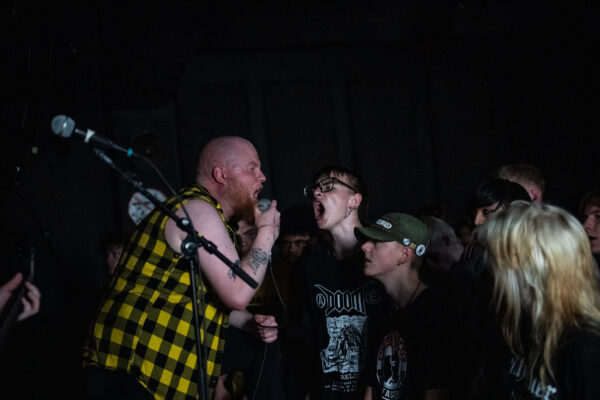
“Gaddavír is formed as a Músíktilraunir band,” Kristján explains. “It was sort of a joke because Guðbergur [Jens Haraldsson, drummer] reached the age limit and it was our last chance to participate,” he says. “We just liked being a part of Músíktilraunir. It was never the goal to win.”
“Wow. We’re better at heavy metal than heavy metal bands themselves.”
“Living in Akranes, we seldom got the chance to hang out in Reykjavík,” Guðbergur starts. “Just hanging out in Harpa, not doing anything and being like, ‘Hey! We’re important, we have a lanyard,” he quips. Guitarist Sigurbjörn Kári Hlynsson joins: “It was the only opportunity to perform in a big venue to a large group of people. It was a big deal.”
Kristján chimes in. “In the week before the [Músíktilraunir] deadline, we made two awful demos. We wrote a song which I thought was the worst song in the world — “Harðir tímar kalla á hart áfengi”. It’s just a funny development of things. And now, this Músíktilraunir joke is performing at Europe’s biggest heavy metal festival,” he smiles.
Up the country
Following a brief rotation in personnel, Gaddavír was ultimately joined by guitarist Bragi Knútsson and bassist Bergur Líndal Guðnason.
“I think you rang me multiple times,” Bragi reminisces of the hiring. “And they’re just asking me to join. I was like, ‘What? Sure. Fuck it, lets go.’ The following day, I wasn’t sure what I was agreeing to,” he laughs.
Now Gaddavír needed a bassist. Reflecting their DIY ethic, Kristján stepped up. “We played a show as a four piece. I thought it went well, and many agreed. But one time, our friend Jónas Haux — who has done wonders for the scene — grabs my t-shirt and drags me offstage and says, ‘You know, it wasn’t really good. You need a bassist.’”
“It needs to be said that when looking for a bassist, the list was limited exclusively to Akranes. It was the first point of discussion,” Sigurbjörn clarifies.
Bergur Líndal Guðnason was recruited, completing Gaddavír as a quintet. Exclusively comprising Akranes locals, Kristján emphasises the importance of maintaining the ties to their hometown.
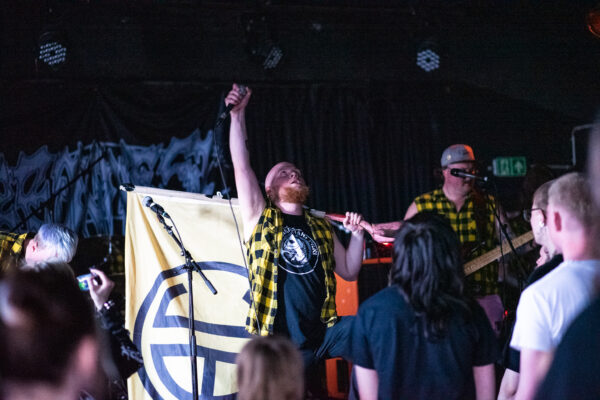
“I think it’s weirdly important that it be an Akranes band,” Kristján confesses. “I don’t have a good answer as to why,” he continues. “But it comes down to the fact that there’s an immense sense of town pride in Akranes. And we tapped into this while at the same time thinking it’s a bit banal. In a fun, corny way. Like, we’re into this and want to be a part of it.”
Little by little, Gaddavír gradually leaned into the bit.
“It was a bit of a novelty being from ‘the country’ — a 30-minute drive from Reykajvík, but whatever,” Sigurbjörn scoffs. “When we played in town, we were ridiculed until we just started owning it. Which is a part of American hardcore culture, representing the hometown. We just took it all the way. It became the brand,” he says.
“I think it’s weirdly important that it be an Akranes band.”
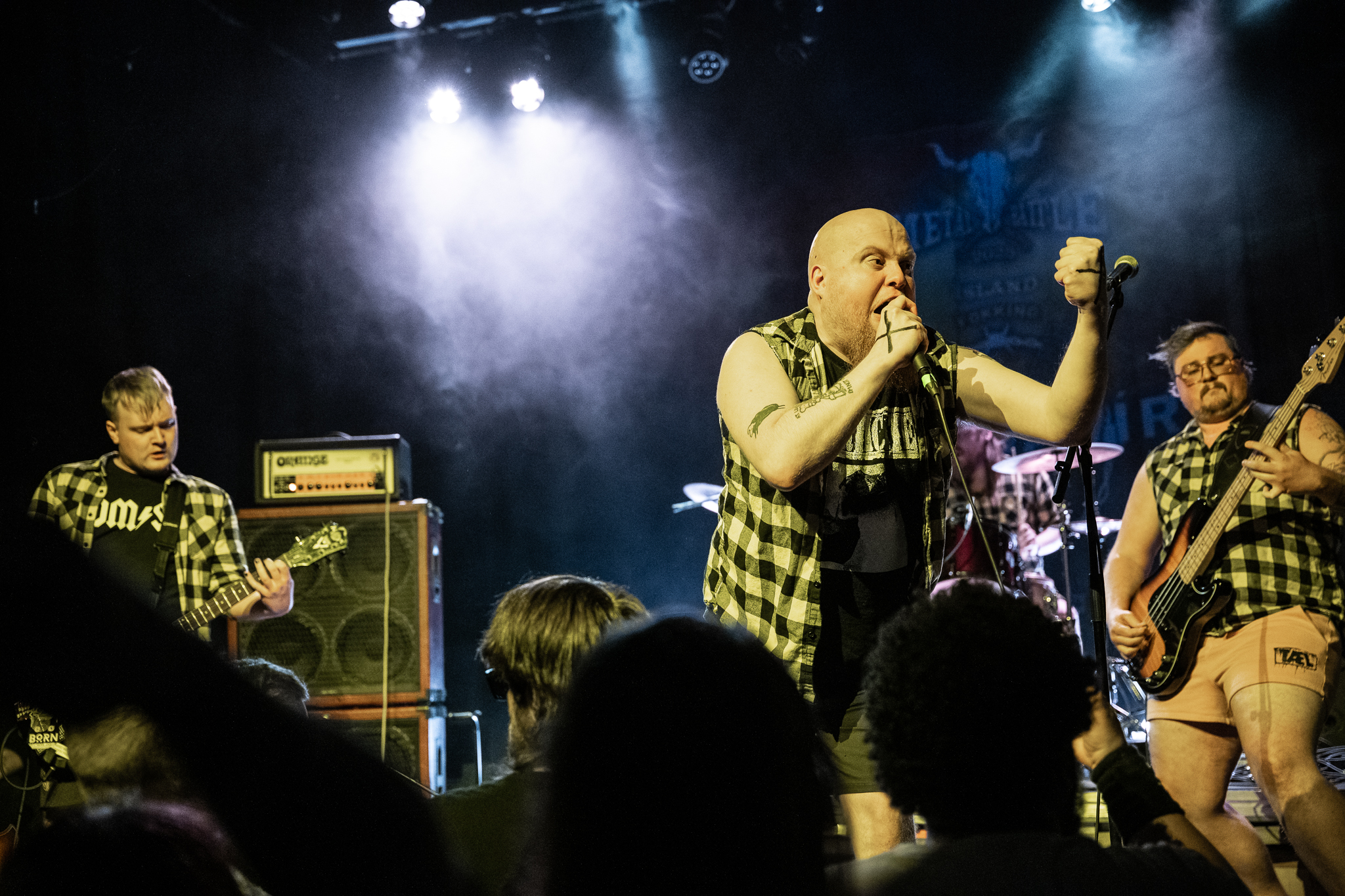
Encapsulating Gaddavír’s sense of identity is found in their stage wardrobe, donning yellow and black flannel shirts — a callback to the Akranes local sports team. Partly inspired by the look of bands such as the Norwegian shock rockers Turbonegro and American thrash group Suicidal Tendencies, Gaddavír took to a uniform stage appearance.
“In my view, the idea of a uniform comes from an interview with the Hives’ Pelle [Almquist]; they always perform in matching suits,” Sigurbjörn opines. “He said that it’s the easiest way to make it look like your set is more produced than it is in reality. It’s that easy. Everyone dresses the same and suddenly there’s a whole look.”
Supporting the scene
Anyone who’s seen Gaddavír perform live knows that they give it their all. Ferocious and unforgiving, the band kicks up a surge of flailing D-beats and fast-paced guitars. Needless to say, their ethos incorporates strong ideological elements of the genre, including DIY attitudes and antipathy towards mainstream culture.
Despite their longevity, Gaddavír’s style means they occupy a scene on the periphery of Iceland’s mainstream music. Still, the members vouch for the genre’s increasing popularity and prevalence.
“There are way more people showing up to concerts now than when we started,” Kristján claims, admitting the challenge in defining the boundaries of hardcore and adjacent rock music genres. “It may be a bit of an elitist idea to list up bands who are purely hardcore, but Krownest — who won the last Wacken battle — they straddle a fine line between being hardcore and nu metal,” he capitulates. “But ideologically, they are hardcore, which influences a certain DIY ethic and some sort of solidarity with marginalised groups, social justice and what have you,” Kristján explains.
“If we’re talking about hardcore ideology, I don’t think there’s a person more invested in it than Ægir Sindri [Bjarnason],” Kristján says.
Justifiably, Sigurbjörn acknowledges that, due to its size, Iceland can’t afford bands to box themselves into a single genre. “You find this ideology spread all over underground bands,” Kristján says.
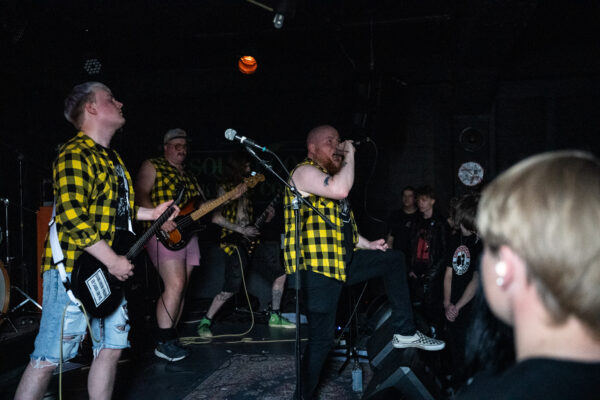
One manifestation of Gaddavír’s dedication to the hardcore spirit can be found in their local initiatives, releasing cassettes via Ægisbraut Records and hosting the annual Lilló Hardcore festival.
Operating out of the old Landsbankinn building in Akranes — which serves as a music rehearsal space these days — Gaddavír members and local musicians have fostered a thrilling community of hardcore punk fans. While not every Akranes resident flocks to a hard rock concert in their backyard, the initiative has seen a resurgence of music interest by kids.
“There used to be a strong band culture in Akranes,” Bergur notes. “What I appreciate about what’s going on at Landsbankinn is not only the interest among young people, but the fact that people are showing up from Reykjavík,” Guðbergur adds.
Bergur agrees. “We’ve seen a tremendous increase in interest. I mean, there are kids forming bands which hasn’t been a thing for 10 years or something.”
Kristján draws parallels with the defunct post-hús in Reykjavík. “The fact that this kind of venue has worked out successfully has bolstered our Akranes pride. I remember how the Skerjafjörður NIMBYism was prevalent in the discourse surrounding post-húsið. That hasn’t surfaced in Akranes, and we’re located in the centre of the old town,” he emphasises.
As the Akranes council prepares to sell the building, Lilló festival faces uncertainty. But Gaddavír is unfazed, certain in the fact that hardcore music will always find another home.
Gaddavír plays Wacken Open Air on July 30. Not in Germany? No problem. Head out to Norðanpaunk on the first weekend in August or see them warm up for Skálmöld on October 10.