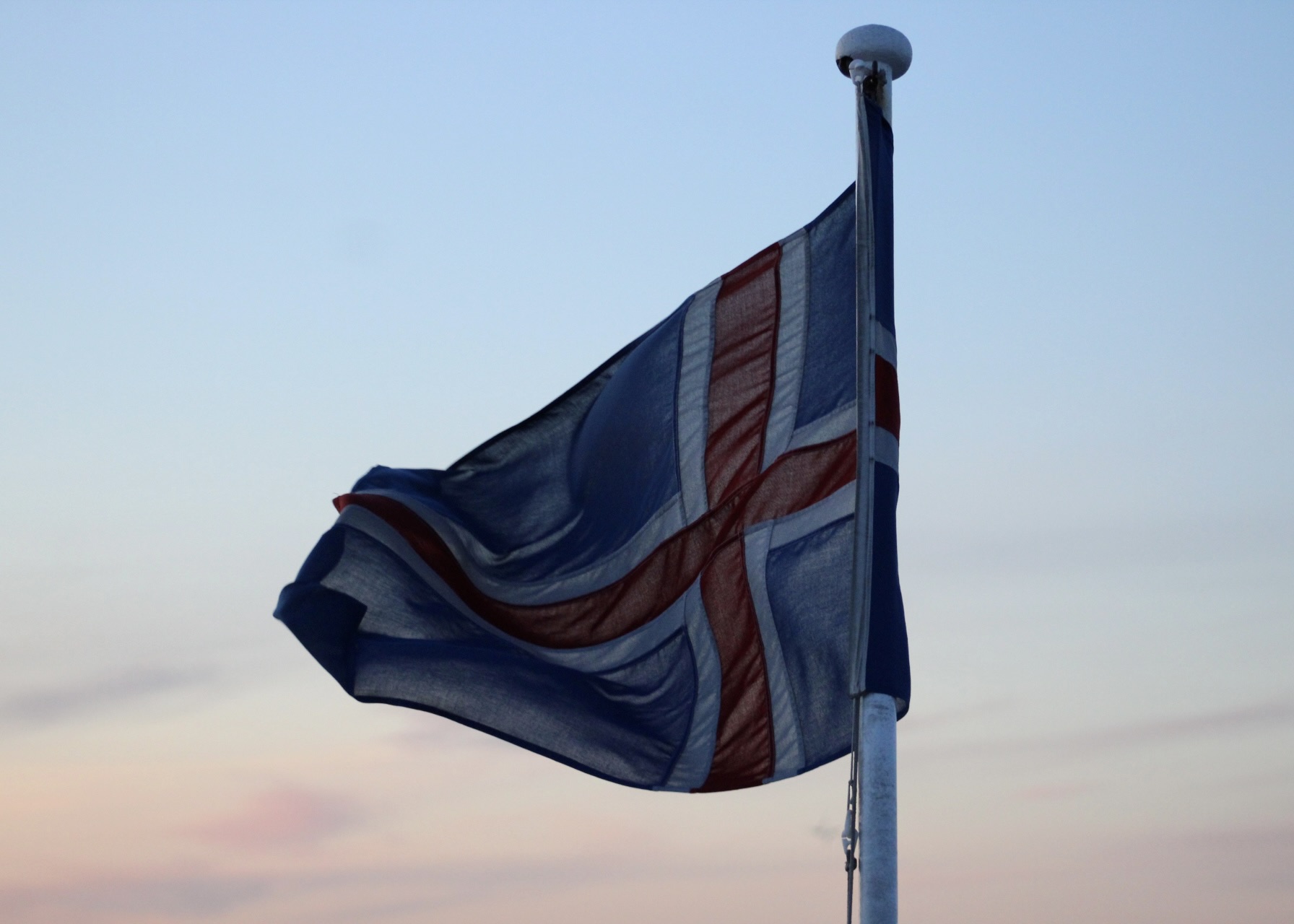
A draft bill from the Icelandic government would allow Icelandic universities to introduce tuition fees for students from outside the European Economic Area (EEA), while public funding that presently covers their enrolment would be withdrawn. In practice, the change would not simply grant institutions the option to charge fees; it would compel them to do so. Given that Icelandic universities are already operating under considerable financial strain — the rector of the University of Iceland has indicated that roughly six billion krónur (around 42 million euros) would be required to reach funding levels comparable to other Nordic institutions — the effects would be significant. When resources contract, programmes perceived as peripheral are the first to be questioned.
Among these is the teaching of Icelandic as a second language. Some critics argue that this lies outside the core mission of higher education. Universities, they suggest, should focus on research and advanced disciplinary training, leaving language instruction to private schools or adult education providers.
This view rests on a misunderstanding of both the nature of universities and the role of language in a small linguistic community. Universities are not merely centres of research; they are institutions of cultural stewardship. In countries with smaller languages, they play a decisive role in maintaining the language as a vehicle of scholarship, administration and public life. Around the world, it is neither unusual nor controversial for universities to serve as key institutions in promoting and teaching the national language to international students.
My country of origin, Italy, offers a clear example. The University for Foreigners of Perugia, founded by royal decree in 1925, is dedicated to teaching Italian language and culture to international students while conducting research in linguistics, pedagogy and cultural studies. The integration of language instruction for non-native speakers within academia is therefore far from radical; it is, in many contexts, standard practice.
The crucial issue is not who should teach Icelandic, but what level of Icelandic competence Iceland expects from those who live and work within its society. If the objective is basic communicative survival, then decentralised and short-term courses may suffice. If, however, the aim is full participation in Icelandic-speaking society, including professional, academic and civic domains, then high-level, structured instruction becomes indispensable.
Public investment in advanced Icelandic education for foreign residents is therefore not an optional generosity. It is a strategic necessity. It is contradictory to lament that it has become increasingly difficult to access services in Icelandic while simultaneously resisting investment in the programmes that enable non-native speakers to reach professional-level competence. A language cannot remain the language of healthcare, education, public administration and democratic debate if those who staff these sectors lack credible pathways to master it.
University programmes in Icelandic as a second language at the University of Iceland illustrate what such pathways look like. They include a full three-year bachelor’s degree and structured diploma tracks aimed at practical and academic proficiency. These programmes are embedded within the Faculty of Icelandic Language and Culture, alongside research in linguistics, literature and cultural history. They are not peripheral service courses but part of the institution’s intellectual core.
The field of teaching Icelandic as a second language remains relatively young. Unlike global languages such as English or Spanish, Icelandic lacks decades of large-scale pedagogical research. Curriculum design, assessment standards and proficiency benchmarks are still developing. This work requires an environment where teaching and scholarship intersect. Universities provide precisely that context. Faculty engaged in research draw directly on classroom experience, while students participate in an evolving field that refines its methods over time.
Developing updated teaching materials and valid assessment tools demands sustained investment. Yet such development is costly and rarely prioritised. At the same time, rhetoric about the supposed impenetrability of Icelandic, combined with uneven learning outcomes, has created a market for courses promising rapid success without explicit grammatical grounding. These approaches may appear attractive but often fail to produce durable competence. Serious linguistic integration requires seriousness in pedagogy.
An explicit claim has also been made that university-level Icelandic functions as a back door for immigration, but this assertion does not withstand scrutiny. A substantial proportion of students enrolled in these programmes are already active contributors to Icelandic society. Many work in healthcare, social services, hospitality, education, research or private enterprise. Some hold advanced qualifications from abroad, others have chosen to move beyond reliance on English in order to participate fully in Icelandic-speaking environments. Enrolling in a structured academic programme is not an easy option. It entails sustained effort, examinations and measurable standards.
The broader context of the proposed tuition reforms therefore matters. Introducing fees for non-EEA students while withdrawing public funding for the university would inevitably affect enrolment patterns. Given that the wording of the bill is generic and contemplates no exceptions, it would in principle mean that professionals arriving from outside the EEA would be unable to access high-level Icelandic education until they obtain permanent residency — typically after four years in the country. If advanced Icelandic programmes become financially inaccessible during precisely the period when linguistic integration is most urgent, the consequences will extend well beyond individual students. The ecosystem linking research, pedagogy and societal integration would be weakened. In a small language community, such weakening carries long-term implications.
The present debate should therefore be framed not as a question of institutional boundaries but as a question of priorities. If Iceland wishes to preserve Icelandic as the language of services, scholarship and public life, it must be prepared to invest in the structures that make high-level competence attainable. Anything less risks creating precisely the situation many fear: a society in which Icelandic remains symbolically cherished yet practically sidelined.