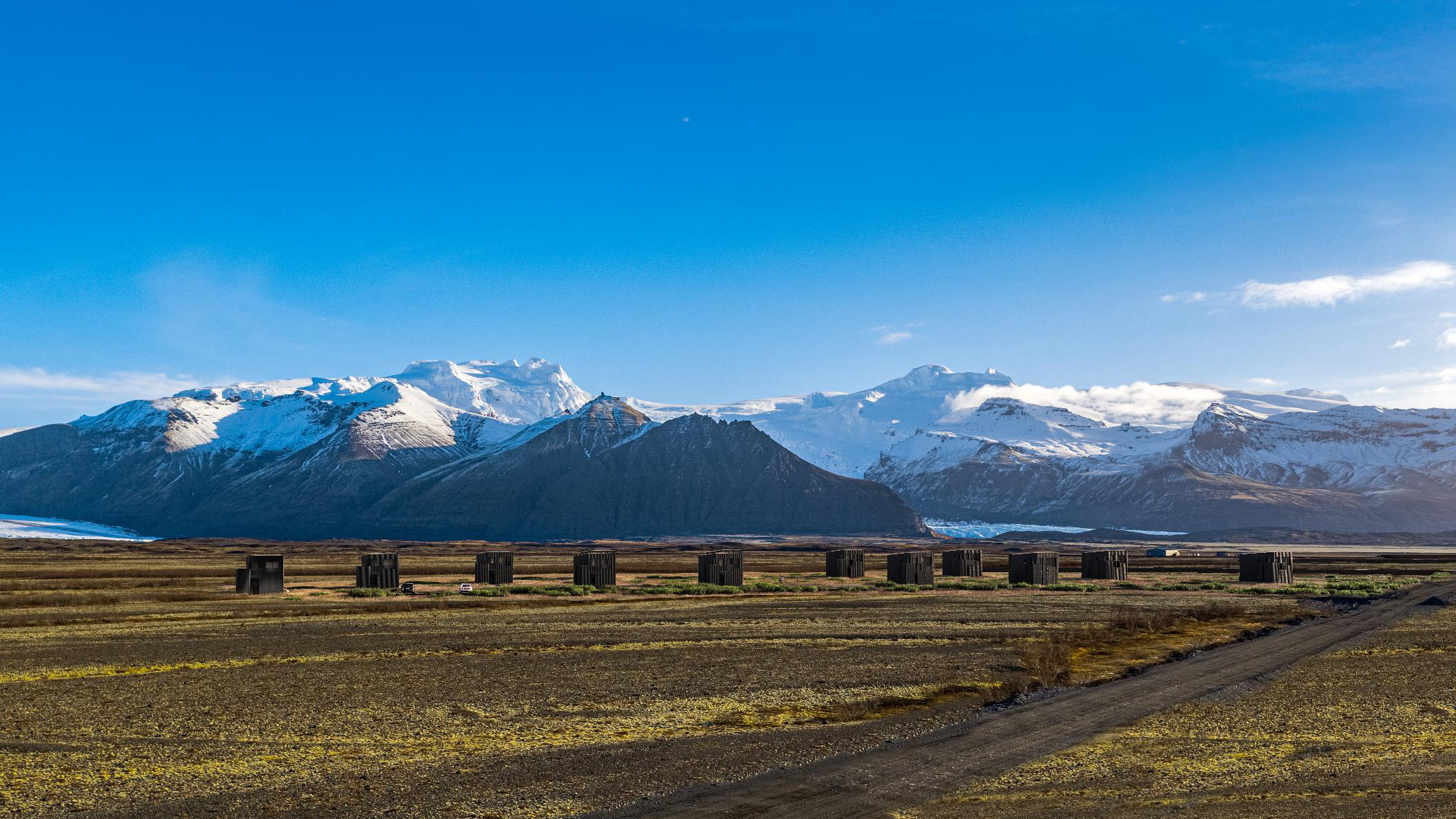
As you drive east along the south coast ring road towards Vatnajökull National Park, you encounter one of the most breathtaking views in Iceland. The long stretches of flat glacial outwash from the volcanic chains, known as sandur, unfold onto a grand view of steep snow-peaked mountains and glaciers rising in the distance.
The scene is so otherworldly that it inspired director Christopher Nolan to make Vatnajökull the setting for the icy planet Matthew McConaughey’s character Miller visits in the film Interstellar. Not surprisingly, Interstellar won the Oscar in 2015 for best visual effects.
But soon that epic landscape will be framed by up to 70 guest houses being built at the foot of the glacier in Skaftafell.
“It seems such a wrong thing to do. The houses don’t fit into the environment,” says Jón Ágúst Guðjónsson, a resident of Skaftafell. “I had a meeting with the council of the town of Hornafjörður before Christmas, and they said everything was done legally, but no one seems to have known about it here, so it wasn’t OK. If you build something like this in front of every glacier, no one will be interested in being here.”
According to Ágúst, the total development, if completed, could accommodate up to 280 people, which he sees as not only an impact on the character of the small community, but also on the livelihood of residents who depend on additional rental income from rooms or houses.
Ágúst moved to the area after suffering a stroke and says that being out in the nature around Vatnajökull helped him tremendously. “I never felt better anywhere on the earth. This is a unique and special place.”
The development property was purchased in 2023 by Arctic Adventures from Stefán Benediktsson, whose family has been in the area for hundreds of years. Stefán was a park ranger at Vatnajökull and a former member of Parliament. The property abuts the Vatnajökull National Park, which earned a place on the UNESCO World Cultural Heritage list in 2019. “It seems such a wrong thing to do. The houses don’t fit into the environment.”
Arctic Adventures formed a 60-40 collaboration with the development company Þingvangur, creating a new venture called Arctic Circle Hotels. (Þingvangur is a real estate development company which has been very active in construction in the Capital Area.) Arctic Circle Hotels owns one plot with 35 tourist cabins approved, while Þingvangur owns an adjacent plot with another 35 cabins approved. Currently construction is underway for the first 13 cabins on the plot purchased by Arctic Circle Hotels.
“We feel sad about it, we obviously want to be in good cooperation with the neighbours,” says Ásgeir Baldurs, CEO of Arctic Adventures. “I think that some of the judgement has been quite harsh, they have been looking at this before the product is finalised, they need to see how the final product will look.”
Ásgeir makes the point that there are already houses in the area. Still he says he understands the strong feelings, “Some people are extremely upset about this, and we will try to listen to them. We will be changing the colours, and we will try to preserve the views as much as possible.”
Still, Ásgeir insists they did everything according to the law, “the planning and zoning was predetermined, we will do our best to make sure the houses will slot into the environment and have as little effect on the environment and nature as possible. Hopefully we can get residents to — I will not say to like it — but to, in a way, accept it. It matters a lot that we have a good experience for our tourists and our guests, obviously we want to respect nature. We think that it is not blocking the view of the national park in a way that is significant.”
Ásgeir says Arctic Circle Hotels is open to changing the plans for the rest of the development. “We are open in the coming project to find a solution for the other 22 houses, our interests and the people who live there are in many cases the same, we want to have the place as beautiful as possible.”
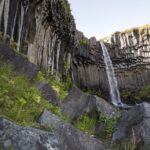
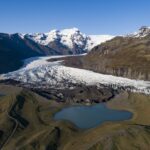
A petition to stop construction was started by resident Klaus Kretzer and has almost 2,000 signatures. Andri Snær Magnason, the well-known environmental writer whose book, On Time and Water, was made into a film that premiered at Sundance Film Festival this month, has called for the removal of the 13 houses under construction. And in late January a lawsuit was filed in the Hornafjörður municipality to stop the development.
“This development has a detrimental effect on the value and significance of Vatnajökull National Park,” says Kristín Vala Ragnarsdóttir, a board member of the environmental organisation Landvernd and author of the forthcoming book The Elgar Companion to Creating a Regenerative Economy for Wellbeing.
“The park has UNESCO certification and in that certification there are stipulations about ‘edge zones’ which these houses do not respect. The building up of these ugly two-storey houses also disrupt the enjoyment of everyone of the park and interferes with the work of smaller tourist operators. It also demonstrates political corruption and cronyism because one of the owners of these houses also sits on the board of Vatnajökull National Park.”
“Vatnajökull is a UNESCO site, so it is of concern,” says Sigrún Ágústsdóttir, Director General of the Nature Conservation Agency of Iceland, which was formed on January 1, 2025. “This development has a detrimental effect on the value and significance of Vatnajökull National Park.”
Two of the environmental agencies that merged with the formation of the new Nature Conservation Agency — the Environmental Agency and Vatnajökull National Park — did give opinions on the development at Skaftafell, but in the end it was up to the municipality to decide.
“If we want to make nature conservation more strict, then we can pay attention to the legislation,” says Sigrún. “Forming an agency is not enough, we need a discussion about the Nature Conservation Act, what are the rules of game, what instruments do we have according to the legislation. It’s not about using strong words; words are not an instrument.”
Sigrún says politicians have been looking at the sale of private lands, and there is the need for more cooperation between the Nature Conservation Agency and local municipalities. “There is rarely the money or political will to buy properties to add on to conservation areas. I don’t know if that was even considered in this case,” says Sigrún.
In a written statement, Sigurjón Andrésson, the Mayor of Hornafjörður, the municipality that oversees the area around Skaftafell, says, “The development at Skaftafell has understandably triggered strong reactions, given the unique and sensitive nature of the area. It is important to note that roughly half of the municipality of Hornafjörður lies within Vatnajökull National Park, and the park’s activity is more extensive here than in any other surrounding region. In practice, almost any development within Hornafjörður takes place in the immediate vicinity of the national park and within its visual landscape.” “Hopefully we can get residents to — I will not say to like it — but to, in a way, accept it. “
Sigurjón acknowledges the anger from local residents, “We have already met with the developer to discuss concrete ways of reducing the visual impact of the buildings, including land shaping, materials, lighting, and future design phases. That dialogue is ongoing, and further discussions with local residents are planned in the coming weeks.”
When asked why the property wasn’t purchased by Vatnajökull National Park, Sigurón writes, “To my knowledge, there has never been any discussion or process regarding the national park purchasing this property. So there simply hasn’t been a scenario where a sale to the national park was on the table.”
With more than two million tourists a year visiting Iceland, the pressure for accommodation is ever growing, and Iceland is increasingly at risk of losing its wild beauty. It’s not just at Skaftafell; tourist developments are popping up everywhere, with two Foss Hotels already in the vicinity of Vatnajökull National Park. New developments are also being discussed for Seljalandsfoss and Þórsmörk.
“The Icelandic authorities have allowed tourism to develop without restraint or steering or proper infrastructure,” says Kristín Vala. “Most Icelanders are not enjoying travelling around the country any more. Being out in nature is crucial for our well-being – and this is having a negative effect on our mental health.”
When asked if Iceland is suffering from too many tourists, Ásgeir doesn’t agree, “We have not reached a point where there are too many tourists coming to Iceland, but the challenge is we need to work on sustainable tourism.”
The Nobel prize-winning writer Halldór Laxness famously wrote about Iceland, “I swear – swear – swear: by everything which is and has been sacred to this nation from the beginning: Iceland shall not be sold.” It appears that may no longer be the case.