
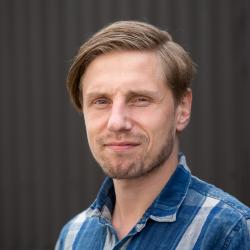
Iceland’s youngest-ever prime minister understands what’s at stake
“I worry about the public’s declining trust in politics in general. That was my sense when I first went into politics. One of the first things I did was to travel the country on my own, meet people at large open meetings and talk with them, to hear about what was on their minds. And it really stayed with me, not having been in politics before, how many people did not trust politicians. I can quite understand that.”
The system is failing, our institutions are broken and the elites are out of touch with the average man. From the White House to Whitehall and Brussels to Budapest, this is the message of mistrust and anger driving a populist rage that is catapulting political outsiders and the far-right into seats of power and causing old democracies and political parties to stumble.
Kristrún Frostadóttir, the youngest prime minister in Iceland’s history, is a political outsider — but not of the kind we’ve gotten used to in the past decade. She is not angry, male, or anywhere near retirement age. At 37, the mother of two young children has experienced a meteoric rise since first entering parliament in 2021 with the then-flailing Samfylkingin (Social Democrats). Last November, she reached the pinnacle of Icelandic politics when she orchestrated a stunning victory in the Alþingi elections, as her party became the country’s biggest. The Social Democrats took 20.8 percent of the vote and 15 of 63 seats. She went on to form a majority coalition with Viðreisn (Reform) and the People’s Party — each led by a woman: Þorgerður Katrín and Inga Sæland. The all-female lineup at the top led commentators to dub it the “Valkyrie government.”
As she speaks in her office in what was once Iceland’s first prison, she knows which way the wind is blowing. She sees how resentment in neighbouring democracies has created a climate where extremism breeds, trust erodes, and apathy hardens into anger. Iceland has, so far, avoided the worst of that fever. But in Kristrún’s telling, that isn’t a permanent state of grace — it depends on whether her government actually works and can deliver.
“I am very worried about the growing disconnect between the top layer of society and the public. Which is why I placed such great emphasis on Samfylkingin strengthening our connection to the people. That doesn’t mean you shouldn’t have principles. We have certain economic, welfare and human-rights principles, but it’s the people who elect you, and you need to be aware of what they are worried about. When I entered parliament I noticed how insulated it can get, people get stuck discussing things they think people care about.”
Unlike most European countries, the far right has never really landed in Iceland. Growing popular resentment across democracies has made extremism easier to sell elsewhere, and Kristrún believes that if she fails to deliver on the mandate voters handed her, the regressive fringe might finally make landfall.
“I think that if the government I’m now leading doesn’t meet expectations, then there’s a risk of that,” she says. “If we fail to reform the state, to use resources better, to execute, then a space opens up for voices saying, ‘I have an easy fix for this,’ and that entails breaking up everything we hold dear.”
She returns to the same premise again and again: competence has to be delivered, not described.
“One can be in favour of the state working well — which I am. I’ve always seen the state as an important part of people’s lives. I think it’s natural that some lean toward greater state involvement and others don’t, but you still have to be critical and accept that certain systems need to be broken up and rebuilt. And I think it’s important that we don‘t get stuck in a fringe-driven debate on the role of the state: a radical right-wing, which doesn‘t want the state to function at all, and an complacent left-wing, which always defends the state and doesn‘t have the courage to reform it.”
In her telling, if the state doesn’t fix itself — use resources better and actually execute — space opens for those peddling “easy fixes” that would hit at the very foundations of Icelandic democracy.
Another woman for another time
For more than a decade Samfylkingin wandered the political wilderness. In 2009, the party was tasked with helping revive the country’s fortunes after the crash. The party was then led by another wildly popular woman, Jóhanna Sigurðardóttir, but the two could hardly be more different. Jóhanna was a battle-tested veteran, forged in the unions and Alþingi, who spent her decades fighting for the little guy. She was anathema to the greedy bankers who had run the country into the ground and had a kind of grandmotherliness that felt like a wool blanket in a winter storm.
Before entering politics, Jóhanna had worked as a flight attendant, a secretary in a crate factory and as a union rep. She entered parliament in 1978 and left 35 years later as the longest-serving female MP in Iceland’s history. Kristrún, on the other hand, is a corporate economist who worked at Morgan Stanley and then as chief economist for the business lobby at the Icelandic Chamber of Commerce. Jóhanna was an old fighter who became prime minister after decades in the trenches; Kristrún was in her third year as an MP when she got the top gig.
Jóhanna’s tenure started strong, but by the end of her time the party had become the sick man of Icelandic politics. In 2013, amid catastrophic polling, she retired, and without her, Samfylkingin fell from 20 MPs in the 63-seat chamber to just nine. Three years later the party barely cleared the five percent threshold and was left with three MPs. Even in 2021, when Kristrún first ran, the party failed to hit double digits and won just six seats. A decade of penance followed.
The banker, the outsider
Kristrún didn’t spring from a party backroom; straight out of the boardroom, she arrived with a ledger and an apt understanding of economics. She studied economics at the University of Iceland and holds master’s degrees from Yale (international studies) and Boston University (economics) and before politics worked in high finance — Morgan Stanley — then as chief economist for the Icelandic Chamber of Commerce. That résumé has made some voters squint and prompted a predictable, lazy right-wing criticism about wealthy left-wingers, but she leans into it.
“I didn’t go into finance or business because I had some wild ambition to be a bank CEO or a high-ranking figure in the financial sector,” she says. “I always had it at the back of my mind that I wanted to use the knowledge I’d picked up, somehow, for the good of the country.
Which is why she says the quiet part out loud. She’s a rich, privileged social democrat arguing against the bootstraps fairy tale: outcomes aren’t just merit plus grind; luck and the scaffolding of a decent state shape lives.
“I’ve been lucky in life, I think the role of luck is generally underestimated in people’s lives,” she says. “Of course you have to make use of opportunities, but circumstances arise — growing up and in adulthood — where people run into different things and some are luckier than others. I’ve always been aware of the position I’ve been in.”
Her outsider status isn’t just novelty; it’s a method that allows a certain manoeuvrability.
“It gives you a certain freedom when you haven’t been doing factional politics for a very long time — to ask why things are done the way they’re done. In the end it’s healthy to have a mix of people in politics: career politicians alongside people from different sectors of society.”
And her leadership style is plainspoken and to the point.
“I’m very organised in how I work and pretty straightforward, and I find it easy to talk to people,” she says. “I set very high standards and I’m fairly blunt, I usually get straight to the point, I don’t speak in riddles, and I say what I think, people should know where you stand.”
The choice of a technocrat in an era of tribal politics isn’t uniquely Icelandic. Canada, too, recently handed the keys to a former central banker, betting that competence can steady a stormy politics. Different countries, different scales — but the rhyme is there: in an age of Trumpism and algorithmic fury, some electorates are reaching for leaders who can show their work.

The love affair continues, for now
Nine months on, the numbers haven’t sagged. In late August, a national poll put Samfylkingin at a remarkable 31.6 percent and well clear of the pack. Viðreisn is holding its ground near its 2024 share; however, the People’s Party has bled some support. It’s the kind of scoreboard that turns a honeymoon into a season.
But high numbers didn’t spare her a test. Spring blurred into summer with parliament effectively held hostage by the opposition over a fisheries-fee bill — an old fight over who pays what for a public resource, dressed in procedural armour. The chamber became a loop of incredibly absurd speeches and points of order; decorum frayed. For a government riding high, it was a governing crisis all the same: laws weren’t moving, the budget calendar was slipping, and the question wasn’t “who’s winning?” but “can they govern?” The patience of the chamber — and voters — stretched with it. That’s the moment when the government chose to break the glass.
The filibuster — a threat to democracy
By early July, the fisheries bill had become the longest debate in the history of the unified chamber — well over 140 hours of argument — before the Speaker invoked Article 71 of Alþingi’s standing orders to impose time limits and push the bill to a vote. Inside the house, MPs call it the “nuclear article.” It exists for precisely this kind of impasse and has been used sparingly across decades — designed to be rare, pressed only when obstruction threatens to grind the republic to a halt.
Kristrún didn’t treat the siege as harmless theatre. From the rostrum she put it plainly: “This is a threat to democracy.”
She explains that for a democracy to function, the majority must be able to govern and fulfil its mandate to the voters.
“Parliament must function and democracy must function, and it has to be able to show that a change of government can take place in this country. Sometimes circumstances arise where a matter simply has to be concluded — that parliament functions democratically and matters are brought to a close in a vote.”
In the end the bill passed; the session exhaled. Far from punishing the government, voters seemed to turn their frustration towards the opposition. Icelanders want debate and an energetic opposition; they don’t want election losers trying to usurp a legitimate mandate, especially when the blockade looks like a favour to powerful special interests.
“Sometimes a matter simply has to be brought to a close in a vote,” Kristrún explains.
If you strip away the procedural choreography, the fight was about rent for a shared resource. The revised law increases what the industry pays into the public purse — how much will swing with catch and price — but the principle is simple: fish are a public asset and the rent should be fair. The opposition, for one reason or other, chose to make that principle a hill to effectively die on. The government chose not to leave the summer marooned there.
Are we Europe?
The question of Iceland’s future in Europe remains one of the country’s chronic migraines. The last time Samfylkingin was in the driver’s seat, the nation’s European Union membership application started down the Brussels staircase and then… stopped. The application has sat ever since in a kind of bureaucratic purgatory — never fully buried, never revived.
Before the election, the topic was glaringly absent from the headlines. A casual observer might not have realised that both Samfylkingin and Viðreisn still keep future EU membership on the books. When asked where she stands, you might expect the leader of Iceland’s most pro-EU party to give the stock hymn about “shared values” and the importance of “having a seat at the table.” Instead, Kristrún is pragmatic to the point of boredom — and that’s the point.
“I’ve been positive toward the European Union. But I think it matters that there is as much unity as possible around such a course,” she says. “It is the Icelandic people who will decide what they ultimately want to do. So I think it’s important that we have a very frank discussion about this, a calm discussion. Accession to the European Union — if it were to come after a referendum on whether we should begin negotiations, and then again after an agreement is concluded — is a process of many years. At the end of the day, this is a long-term project. It will not get us out of any bind right now.”
Her outsider profile helps here. Is she deftly dodging a hot-button topic to avoid lighting up café tables and comment sections? Or does she see EU talk as a needless distraction from the grindy work of fixing the state? Hard to say. In many ways she remains a kind of Rorschach test — which means the public can still project what they want to see. Either way, a popular referendum functions as a pressure valve: a promise to let the people decide twice, first on talks, then on a deal. The open question is what she will do when that clock starts ticking: campaign hard for a result, or play referee and call it democracy either way.
Trump, Greenland and a small country’s big nerve
Iceland’s security policy since World War II has rested on a simple fact: the United States has seen a strategic interest in protecting the island that sits astride the GIUK gap, the naval chokepoint between Greenland, Iceland and the United Kingdom. Keflavík, the air-sea lanes, the North Atlantic: for 80 years the logic has been that what is good for the US Navy is good for Icelandic security.
That assumption looks less automatic when Washington takes a more transactional, strongman approach to treaties and alliances. Donald Trump has talked openly about “taking” Greenland — our closest neighbour — and has treated commitments as chips to cash. Which raises the uncomfortable question many in Reykjavík now whisper aloud: if push comes to shove, would a Trump White House honour the 1951 bilateral defence agreement? The spine is the 1951 bilateral defence agreement and Iceland’s NATO role; for 80 years, that’s been the hard security house.
Kristrún answers with steady realism.
“We are, for example, a country without a military — the only such country in NATO — and we have a bilateral defence cooperation and agreement with the United States,” she says. “As for whether we can trust the Americans, I’ve long viewed Iceland as having enormous importance in the Atlantic, and I think that will hardly change.”
Some commentators have said Trump’s unreliability and disregard for his allies should make Iceland turn to Brussels for its security guarantees, but Kristrún doesn’t think it’s that simple. Joining the EU wouldn’t replace Iceland’s core security setup, built around NATO and the US. At best, it would layer political and economic ties onto an existing security frame that still runs through NATO and Washington.


Immigration — “This is a new situation for us”
Kristrún’s line on immigration isn’t the soft approach of “open arms” or the hardliner stance of “close the gates.” She treats it like what it is for Iceland: new.
“This is a new situation for us,” she says. “We’ve gone from being relatively insulated to handling a much larger flow of people — many arriving under vulnerable circumstances. As a social democrat, I see the state as a vital part of people’s lives, but that also means the state has to work. If it isn’t working — if exploitation happens in the shadows — we have to change it.”
Then the uncomfortable question she says the left should own rather than dodge. She poses it as a question, not a conclusion:
“Are we importing class stratification to this country — something we haven’t lived with before?”
She points to the concrete: reports of human trafficking, wages slipped below the legal minimum, company-tied housing that blurs the line between accommodation and control. The fix, in her telling, is prosaic and testable: tougher enforcement, faster processing, sham recruiters prosecuted and the blunt admission that integration costs money — and planning — up front.
There’s a Nordic context here, too. Denmark’s Social Democrats under Mette Frederiksen have moved to a far more stringent paradigm on asylum and migration; Sweden’s mainstream has tightened, often under pressure from parties further right. Kristrún isn’t importing another country’s playbook, but she isn’t pretending Iceland lives on a different planet either. The challenge for a social democrat, as she frames it, is to hold together a credible welfare state while insisting on rules that are actually enforced in the labour market and at the border.
The backdrop to all of this is an increasingly hostile environment; the street politics have gotten louder. The group Ísland þvert á flokka (Iceland across parties) has staged anti-immigration protests on Austurvöllur with demands to “close the borders,” protect Icelandic culture and detain asylum seekers; counter-protests have faced off just across the square. Further out on the edge, a vigilante outfit calling itself Skjöldur Íslands (Shield of Iceland) has shown up downtown in matching black hoodies, cross emblems on their chests, promising to “protect” Icelandic women from “predatory foreigners.” Some members have past convictions for violent offences. This is the ecosystem Kristrún says she worries about: when the state looks incompetent or indifferent, the “easy answers” arrive in uniform. Her counter is deliberately undramatic. Make the system work, or the fringes will offer to break it for you.
Keeping the gang together
The “Valkyrie government” headline is cute, if tacky; the test is whether a three-party cabinet led by three women can do the boring things that rebuild trust. On paper the balance is clear: Samfylkingin holds the wheel; Viðreisn is the liberal, pro-EU ballast; the People’s Party brings retail politics and a low-income focus. In practice, it’s three leaders with different constituencies who choose to share risk. Kristrún’s promise to the public was not a grand ideological rewrite; it was a housekeeping list: housing, healthcare waits, a saner interest-rate path, enforcement where the state’s grip has slipped.
Since taking office, the coalition has also started trimming the machinery, including reducing ministries from 12 to 11, moving to merge overlapping agencies and even crowdsourcing savings. An open ideas portal pulled in just under 4,000 submissions with thousands more suggestions, and a working group picked the best for the cabinet to act on.
Inside the coalition, her business-world neatness and “very high standards” management style will either keep the train on time or grate. So far, the women at the top have decided friction is less interesting than results. There are limits to harmony; there always are. But the choice to ride out a summer-long filibuster, press the “nuclear option”and pass a bill that asks more of an industry that profits from a public resource was a clear signal: this cabinet is not afraid to spend political capital early.
The coming clean-up
Kristrún describes the next few months in two plain words: value creation and clean-up.
“There will be a new transport plan laid before parliament,” she says. “It matters enormously” — the tunnels, roads and ports people actually use. Alongside that, “we’re launching an industrial policy that ties into immigration and to growth — so we’re not stuck at zero per-capita growth.”
To finance and sequence the big builds, she wants an infrastructure company: a state vehicle that bundles projects, spreads risk and standardises procurement so government isn’t reinventing the wheel with every bridge or tunnel.
And the agenda is getting names and dates. The government has already flagged that the new Samgönguáætlun — the multi-year transport plan — will be brought forward this autumn, with a fresh priority list for tunnel projects; the infrastructure minister has said he isn’t bound by the previous cabinet’s ranking and won’t tip his hand before the plan is published.
The money is already moving: after the 2025 budget passed, total allocations to transport were set at a little over ISK 62 billion — up ISK nine billion year-on-year — with work flagged on the Westfjords, Reykjanesbraut, the Hornafjarðarfljót area, and a push to reduce one-lane bridges on key routes.
The other half is housekeeping. The last coalition was often dinged for drifting on big items like infrastructure and housing.
“We are continuing to work on reform projects,” she says — standardising rules, cleaning up procurement, eliminating duplication — “using money better and, if I can put it this way, doing some cleaning up. This will be a tidying-up autumn.”
According to the government, over half of the efficiency group’s proposals — drawn from thousands of public and institutional suggestions this spring — are now in implementation or review across ministries.
There’s also a political variable no plan can ignore: will the opposition try to paralyse parliament again? Kristrún’s answer is as procedural as it is political.
“Parliament must function and democracy must function,” she says. “Sometimes a matter simply has to be brought to a close in a vote.”
She isn’t spoiling for a fight; she’s promising not to leave the machine jammed. If the summer’s siege returns, the Speaker still has the ability to shut down a filibuster in the drawer.

Making the state work, or else
The great political reshuffle of the 2020s isn’t just about left and right; it’s about faith and proof. Faith in experts fell, often for understandable reasons, and anti-intellectualism has become endemic, with the COVID pandemic pushing it into overdrive. The public has often felt alienated by an academic and HR-coded dialect, which its main detractors have labelled “woke.” The reward, again and again, has gone to performers who offer certainty and enemies. Iceland, insulated by geography and smallness, isn’t immune to the vibe. It just has better odds of recognising itself.
Kristrún positions herself against the performance instinct. She’s an administrator who talks about the state like a machine that should hum, not a stage set for big feelings. She’s comfortable (so far) saying “we broke this” when a system fails and “we’ll change it” without fanfare. It can sound dry and boring in an era that rewards social media spectacle and trolling. It can also sound like adulthood.
“You can’t build a strong welfare state unless the state is strong and the systems actually work,” she says, before borrowing a famous Sjálfstæðisflokkurinn slogan: “Macroeconomic stability is a major welfare issue.”
When she claims that if the government she’s leading doesn’t meet expectations, we could see a fundamental shift in Icelandic politics toward the extremes, she isn’t theorising. This is what is happening across the West. There’s a reason she keeps her eye on the boring parts. Populism thrives in the gap between promise and delivery; in that gap trust dies first. Her wager is that competence is not only good government; it’s effective politics. She wants to prove that a modern welfare state can still work, that rules can still be enforced without cruelty, that parliament can still pass a law without eating itself alive. If she’s right, the fringe stays a rumour.
So far Kristrún seems to be getting it right and the electorate’s love affair with their prime minister continues. In recent polls she consistently ranks as the country’s most popular minister, and her approval ratings have been hitting the sixties, a remarkable achievement in post-crash Iceland. However, her social democratic predecessor Jóhanna also enjoyed a pleasant, albeit short, honeymoon and her tenure nearly ended the party.
The traditional big issues have not been solved yet; the inflation spectre remains stubbornly high, young people are struggling more than ever to get into the prohibitively expensive housing market, public schools keep posting terrible results compared to neighbouring countries, the welfare system is overstretched, immigration is here to stay, etc. And then there are the elements of the opposition, who in lieu of offering real policy solutions to actual problems have turned to importing culture wars from the US.
There is a lot to get wrong and if she gets it wrong, the “easy answers” get their turn at the microphone.
That, more than any ideological declaration, is the drama of her first year: not whether she says the right words, but whether the machine she runs does what she says it will. During times that can feel like Ragnarök, Iceland chose the Valkyries; now it wants receipts and results.
Buy subscriptions, t-shirts and more from our shop right here!


