Prog-folk trio Falinn Gjóður wins the cumbersome Músíktilraunir
As spring rolls around, nothing encapsulates the turn of the Icelandic music season as well as Músíktilraunir. Since the 1980s, the perennial battle-of-the-bands style competition has been platforming musically inclined adolescents and slingshotted some of them to worldwide fame. For this year’s iteration, 11 acts from four qualifying rounds were selected to perform in the finals, held on March 28.
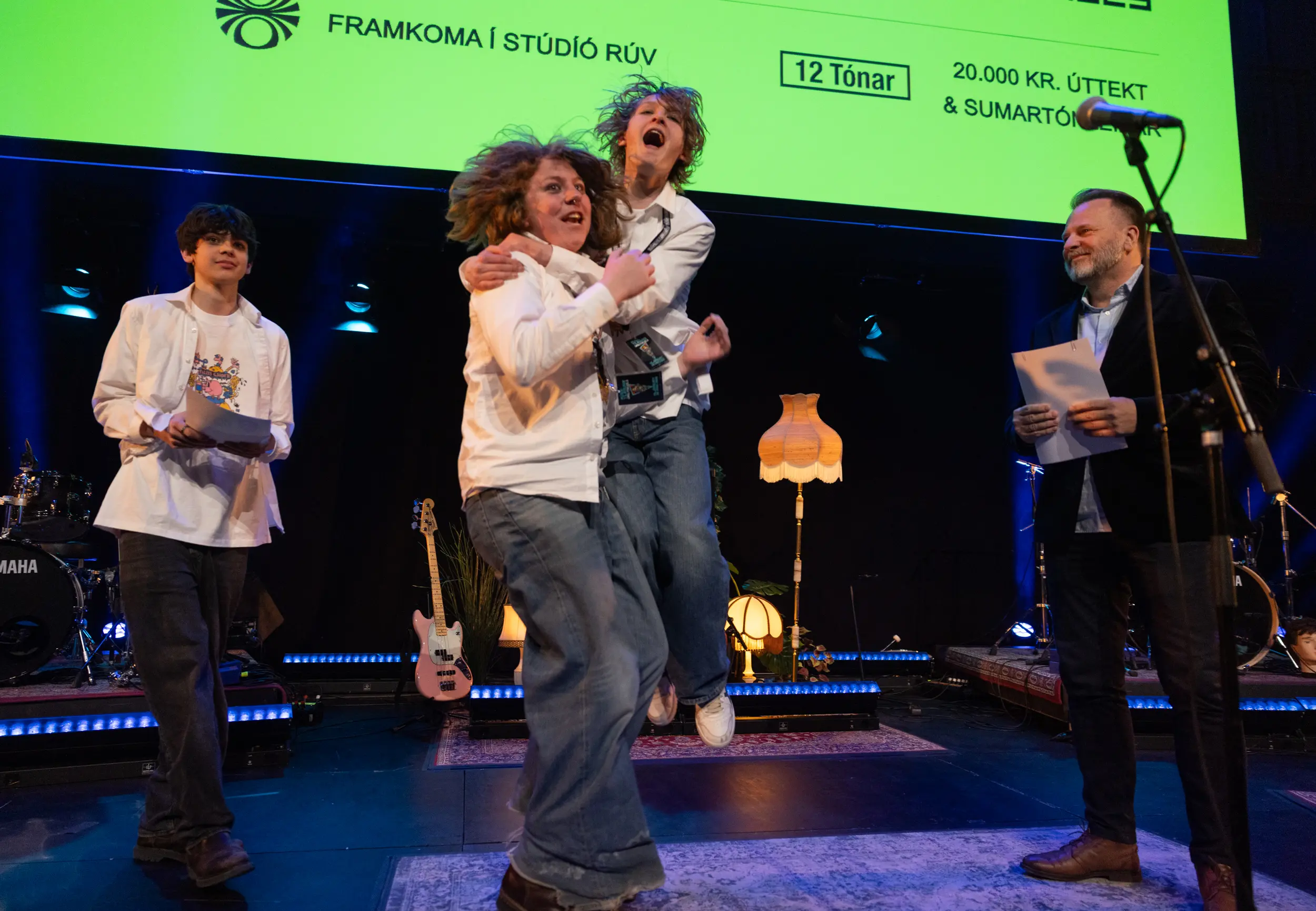
Ultimately, it was the prog-folk trio Falinn Gjóður (Hidden Osprey) which took home first place, followed by experimental jazz group Brenninetla in second place, and IDM artist Lára in third.
An untimely decision
Comprised of three 16-year-olds, Falinn Gjóður plays a 21st-century rendition of progressive and folk rock. Citing influences such as Frank Zappa and Hinn Íslenski Þursaflokkur, Falinn Gjóður uses elements of traditional songwriting thrown into a shaker with disparate elements of rock, sifted through so many filters that the original source is long contorted. Performed by a bass, electric guitar (and sometimes, a banjo), and electronic drums, the arrangements were made from necessity rather than aesthetics.
“We didn’t form the band until two days before the deadline.”
“We just did it because we couldn’t find a drummer in time for the show,” guitarist Þorri explains. “It’s a bit of a hassle to have a drummer, and the electronics are good,” bassist and lead singer Aron Elí Arnarsson continues. “Eventually we want to find a drummer,” he says.

Having been introduced to each other through school and their musical education, the three were in informal talks of forming a band based on their mutual music interests. Músíktilraunir, however, served as the band’s impetus. “We didn’t form the band until two days before the deadline,” Aron admits.
Love for the game
Despite their young age, the musicians are incredibly articulate in describing the pre- and post-show jitters, the current state of the music scene, and their future plans.

“We weren’t hoping to win. We were just participating to have fun,” keyboardist, computer operator and background singer Baldur Þórarinsson says. “I’d say we weren’t playing just to win. It was just supposed to be a bit of fun,” Aron concurs. “When our name was called out, it felt like a dream. I’m still waiting to wake up,” he explains. “A lot of people have complimented us, and that’s so encouraging,” Þorri says.
 For teenage musicians, access to public music spaces has always been a barrier given strict age requirements at music venues. With the decline of mid-sized venues and bars, this access is further curtailed, giving increased importance to spaces such as Músíktilraunir.
“It’s a bit sad,” Aron comments. “The number of places seems to be going down. But if you look hard enough, for example what’s going on at Iðnó and that sort of thing. If you know where to look, there’s enough to be found,” he continues on a positive note. “I think accessibility to these places, like Músíktilraunir, needs to be increased. Or venues that allow small bands to perform. It’s difficult to enter the scene,” he ruminates.
A declining institution?
With this year’s Músíktilraunir in the bag, countless young musicians have sought the opportunity to further their musical aspirations. Still, as every new year passes, it becomes more and more unclear what kind of talent the institution wants to incubate — and how it wants to do so.
Notwithstanding the high median age of the organisers and jury panel, very few winners since the infamous gap year of 2020 — apart from perhaps KUSK — have managed to establish themselves as an artistic force and build on the resources and prestige a Músiktilraunir win provides.
Whether this is an industry or an institutional issue is unclear, but the fact remains that Músíktilraunir has become a rigid establishment, and young people don’t really vibe with institutions. As asserted before, the system needs evolution.